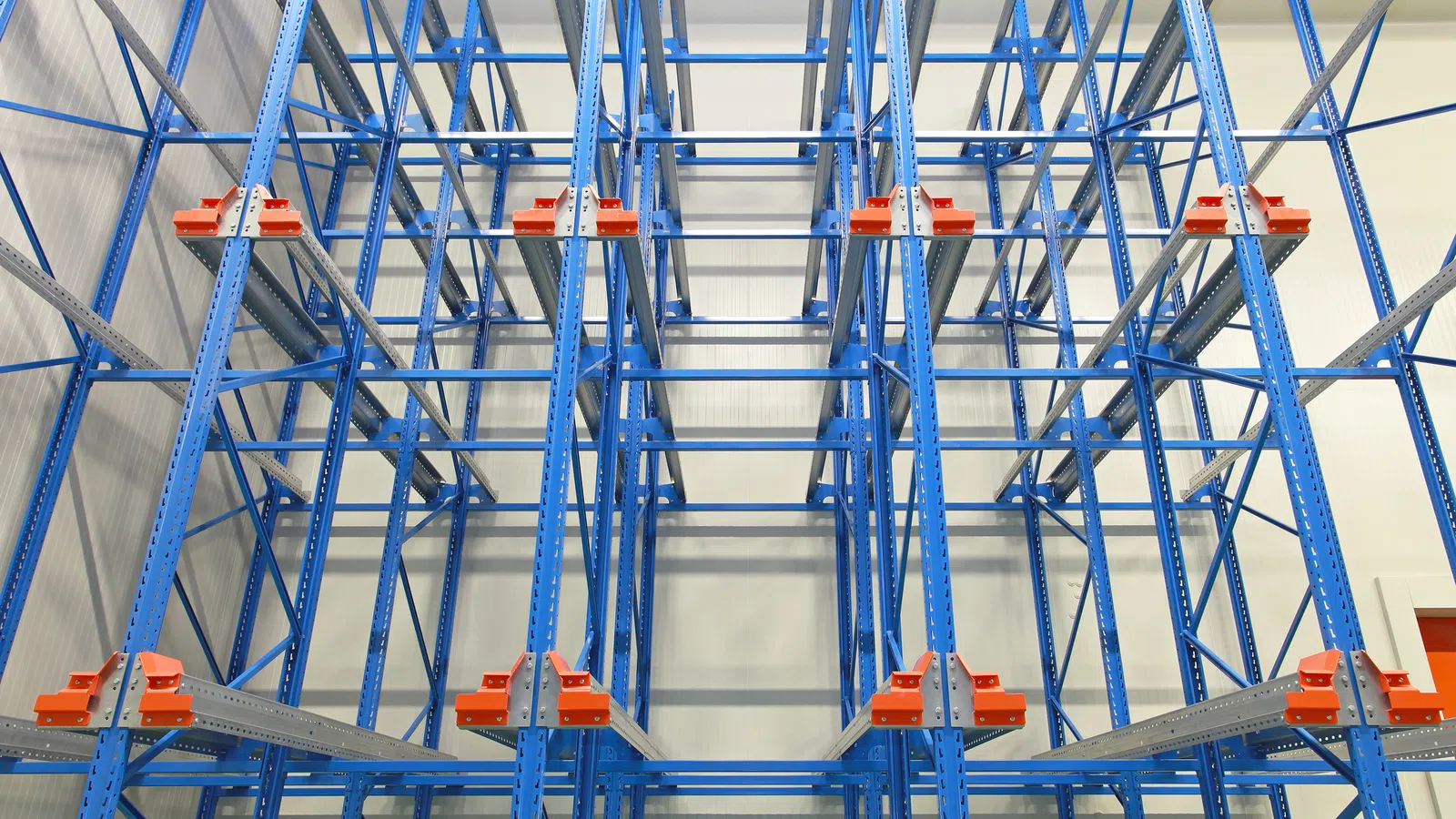
Drive-In & Drive-Thru Pallet Rack in Atlanta, GA
More Pallets, Fewer Aisles.
Quote Drive-In Rack
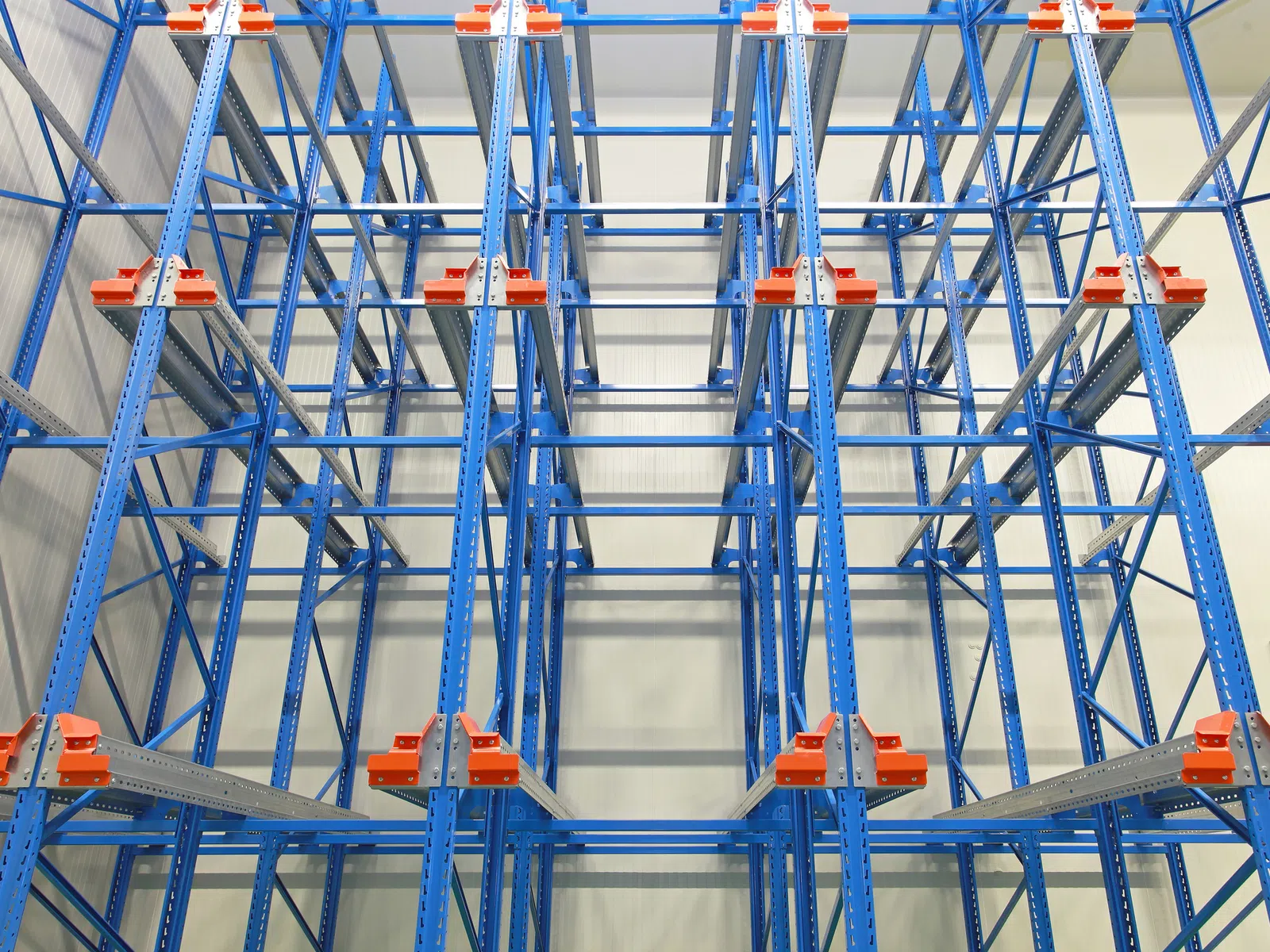
What Drive-In Rack Is
In 30 Seconds
Drive-in rack replaces individual pallet positions with continuous rails running back into the structure. Pallets rest on their edges on the rails; the fork truck drives into the lane to place or retrieve them.
Removing the aisle is the point. Selective spends roughly half its floor on aisles; drive-in spends almost none. Entered from one side, it's LIFO. Drive-thru, entered from both ends, gives FIFO at the cost of a second aisle and some density.
The lane is a commitment: one SKU per lane, since reaching the back pallet means clearing everything in front.
- What it is. Rack with continuous rails instead of individual pallet positions, deep enough that the fork truck drives into the lane.
- What it buys. Density. More pallets per square foot than any other rack system.
- What it costs. Selectivity, and a higher exposure to rack damage, because the truck is inside the structure.
- Where it belongs. Few SKUs, many pallets each. Cold storage, beverage, and anywhere refrigerated or leased cube is the dominant cost.
Where Drive-In Rack Earns Its Cost
Where It Pays Off
Drive-in earns its density penalty in low-SKU, high-volume operations, and especially anywhere floor space or refrigerated cube is expensive. Six conditions cover where that math works.
Designed and Installed in Atlanta, GA
Engineered for Trucks
Drive-in layouts are decided by the truck as much as the rack. Lane width comes from the truck plus the load plus a working clearance, and getting that wrong produces a system your drivers hit every day. We lay it out in AutoCAD against your actual truck dimensions and pallet footprint, not nominal figures.
Damage protection is designed in, not added later: entry guides, floor guide rails, and column protection are part of the original layout on every system we install, because contact is a matter of when, not if.
Permitting is part of the scope. Drive-in installations are often tall and heavily loaded. We hold a Georgia commercial contractor license, identify what applies during the proposal, and pull the permit ourselves.
Frequently Asked Questions
FAQs
How deep can a drive-in lane be?
Commonly four to twelve pallets, engineered to the application. Deeper lanes store more and slow retrieval, and past a point the truck cycle time inside the lane starts eating the benefit. Depth is chosen from your pallet count per SKU and your throughput.
Does drive-in rack get damaged more than selective?
Yes, and planning for it is part of the design. The truck operates inside the structure rather than alongside it. Entry guides, floor rails and column protection reduce it substantially, and a regular rack inspection catches what gets through.
Can we convert existing selective rack to drive-in?
Components are generally not interchangeable, so it is usually a new system rather than a conversion. The existing rack frequently has a use elsewhere in the building, and we account for that in the proposal.
What about sprinklers?
Deep lane storage changes the fire protection design, sometimes significantly, and in-rack sprinklers are common. This is decided with your fire protection engineer before the rack layout is final, not after.
Tell Us Your Pallets per SKU
Start a project
Pallet count per SKU, whether stock is date-coded, your clear height and your fork trucks. Those four decide whether drive-in is right before anything is drawn.