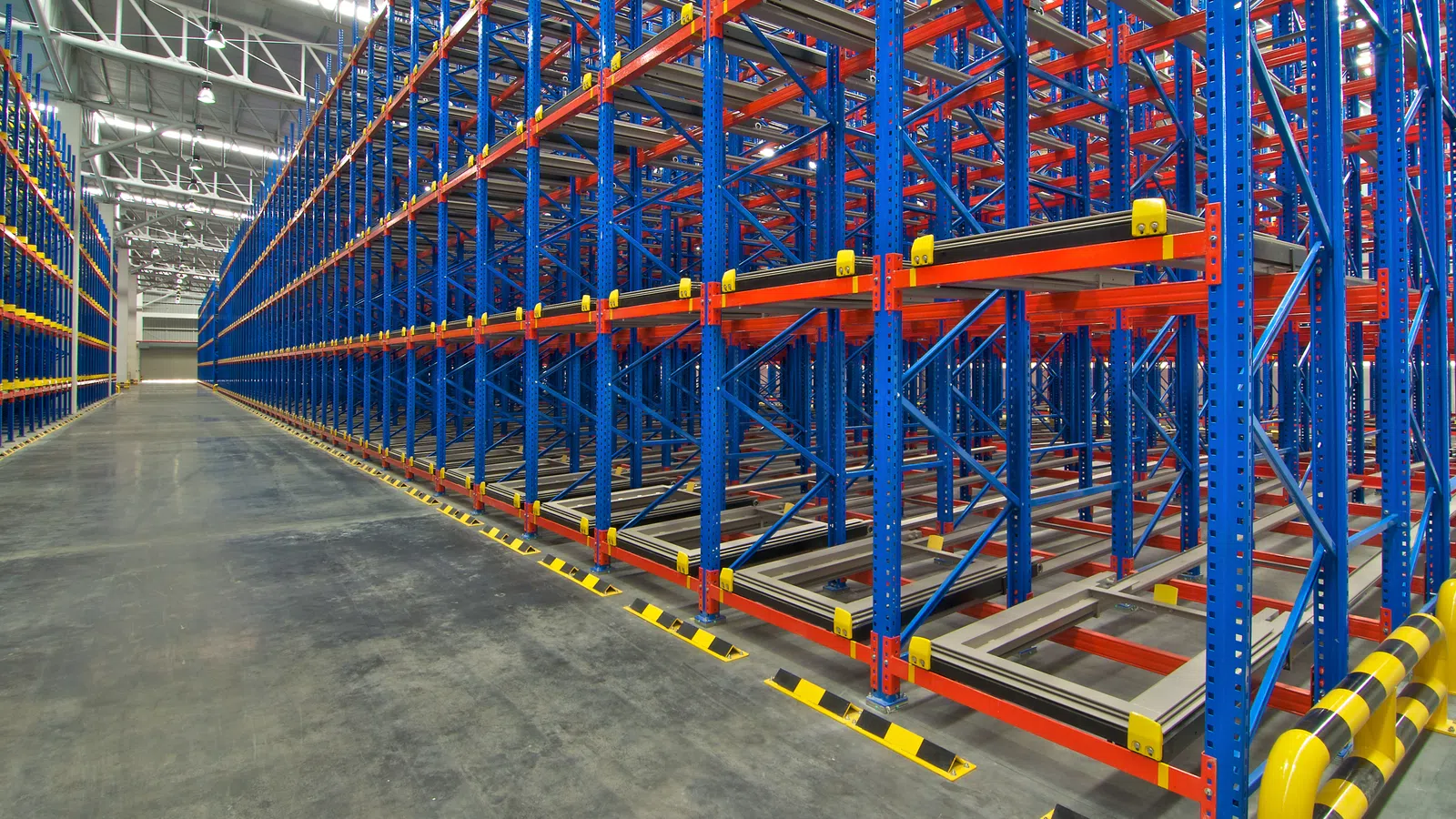
Push Back Pallet Racking in Atlanta, GA
One Aisle, Several Pallets Deep.
More Pallets, Same Footprint
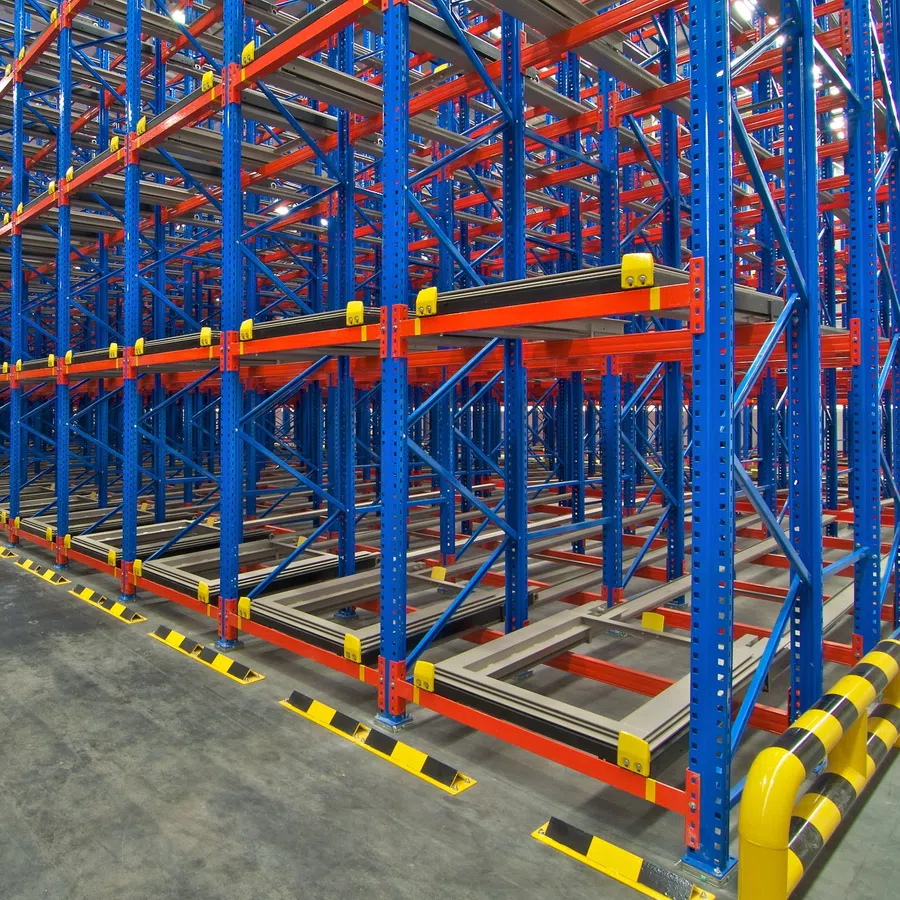
What Push Back Rack Is
Quick answer
Push back rack is a pallet storage system in which each lane holds several pallets, one behind the other, on a set of nested carts that ride on slightly inclined rails. The fork truck places a pallet on the front cart and pushes it back as the next one loads. When the front pallet is picked, the one behind it rolls forward to the face.
Each lane, at each level, holds one SKU. Lanes typically run two to six pallets deep. Loading and picking both happen from the same aisle, so a double-sided run needs one aisle where selective rack would need several.
- Two to six deep, one SKU per lane per level
- Last in, first out
- The fork truck never enters the rack
- Laid out in AutoCAD against your column grid, clear height and sprinkler layout
When Push Back Is the Right Call
Fit
Push back earns its place when you have more pallets per SKU than selective rack handles well, but more SKUs than drive-in handles well. That describes most growing distribution operations: the fast movers run three to five pallets deep, and there are too many of them to give each a drive-in lane. It is the wrong choice in three situations, and we will tell you so:
- Date-coded stock that must rotate first in, first out. Push back is last in, first out. Pallet flow is the FIFO answer.
- One or two pallets per SKU. The carts cost more than the density is worth. Stay selective.
- A handful of SKUs, dozens of pallets each. Drive-in stores deeper for less per position.
Installed by Our Own Crews
Supply and install
We lay the system out in AutoCAD, supply it, and install it with our own crews to RMI / ANSI MH16.1: base plates anchored per the design, load plaques posted, rails and carts checked lane by lane before handover. Where your jurisdiction requires a permit, we pull it. See pallet rack installation for how an install runs.
Frequently Asked Questions
Common questions
Is Push Back Rack FIFO or LIFO?
Last in, first out. The pallet loaded last sits at the face and comes out first. If your stock is date-coded and has to rotate oldest first, pallet flow is the right system.
How deep can Push Back Rack go?
Two to six pallets is the usual range. Most systems we lay out run three or four deep, because that matches how many pallets most SKUs actually hold.
What is the difference between Push Back and Pallet Flow?
Push back loads and picks from the same aisle and is last in, first out. Pallet flow loads from one aisle and picks from another, on gravity rollers, and is first in, first out. Pallet flow needs two aisles and costs more per position.
Do I need special pallets?
Not special, but consistent. Pallets ride on carts, so broken bottom boards or mixed pallet sizes cause problems that selective rack would tolerate.
Can you add Push Back to our existing rack?
Often. It depends on whether your existing uprights are rated for it and compatible with the carts. We check before quoting.
Does it need a permit?
Racking above a certain height often does, and storage above 12 feet can bring in the fire marshal as well. The thresholds are set locally.
Tell Us Your Pallets per SKU
Start a project
SKU count, pallets per SKU, clear height and your fork trucks. Those four decide whether push back is the right rack before anything is drawn.