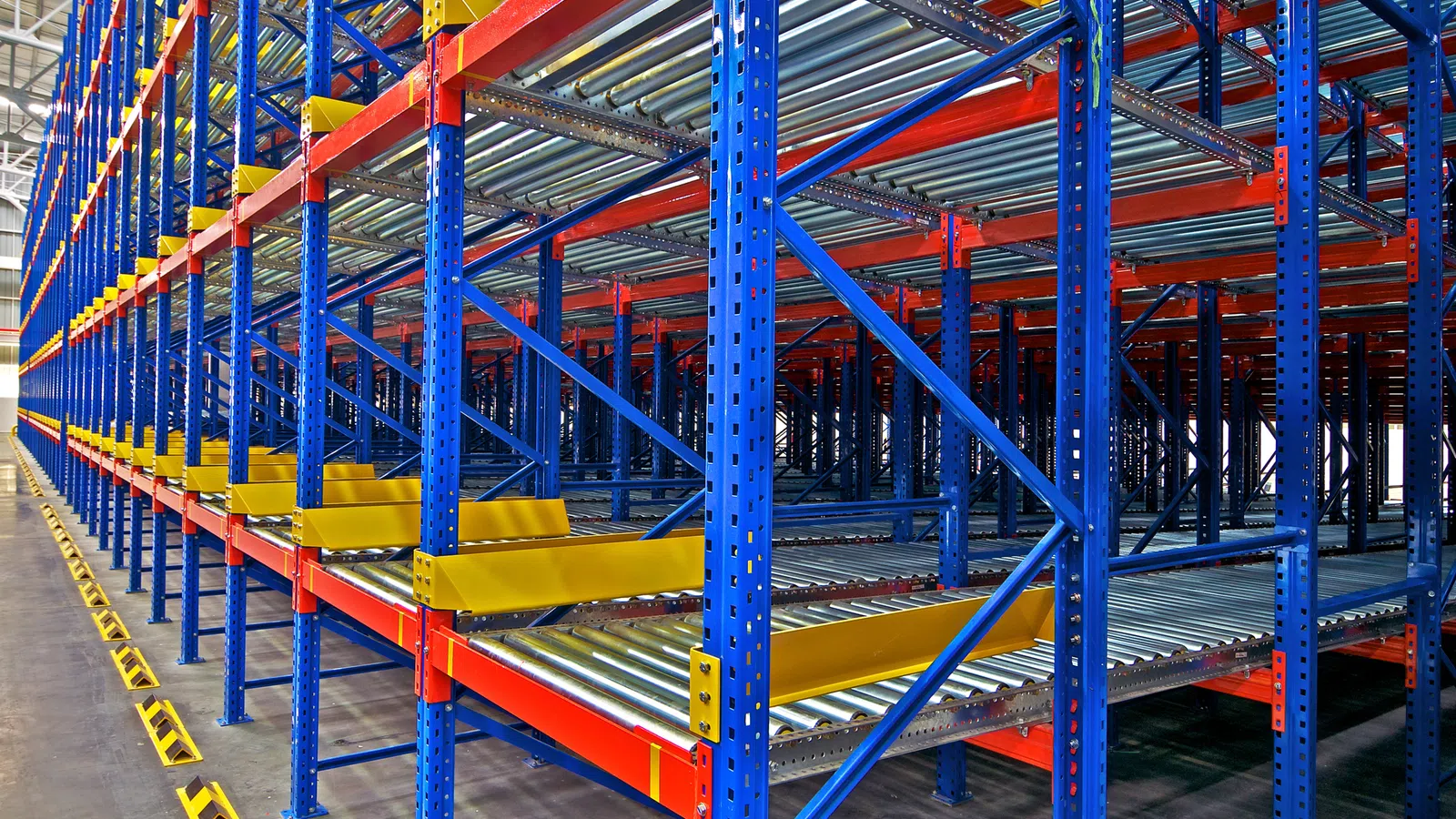
Pallet Flow & Carton Flow Rack in Atlanta, GA
Oldest Pallet Out First.
Keep Pallets Moving
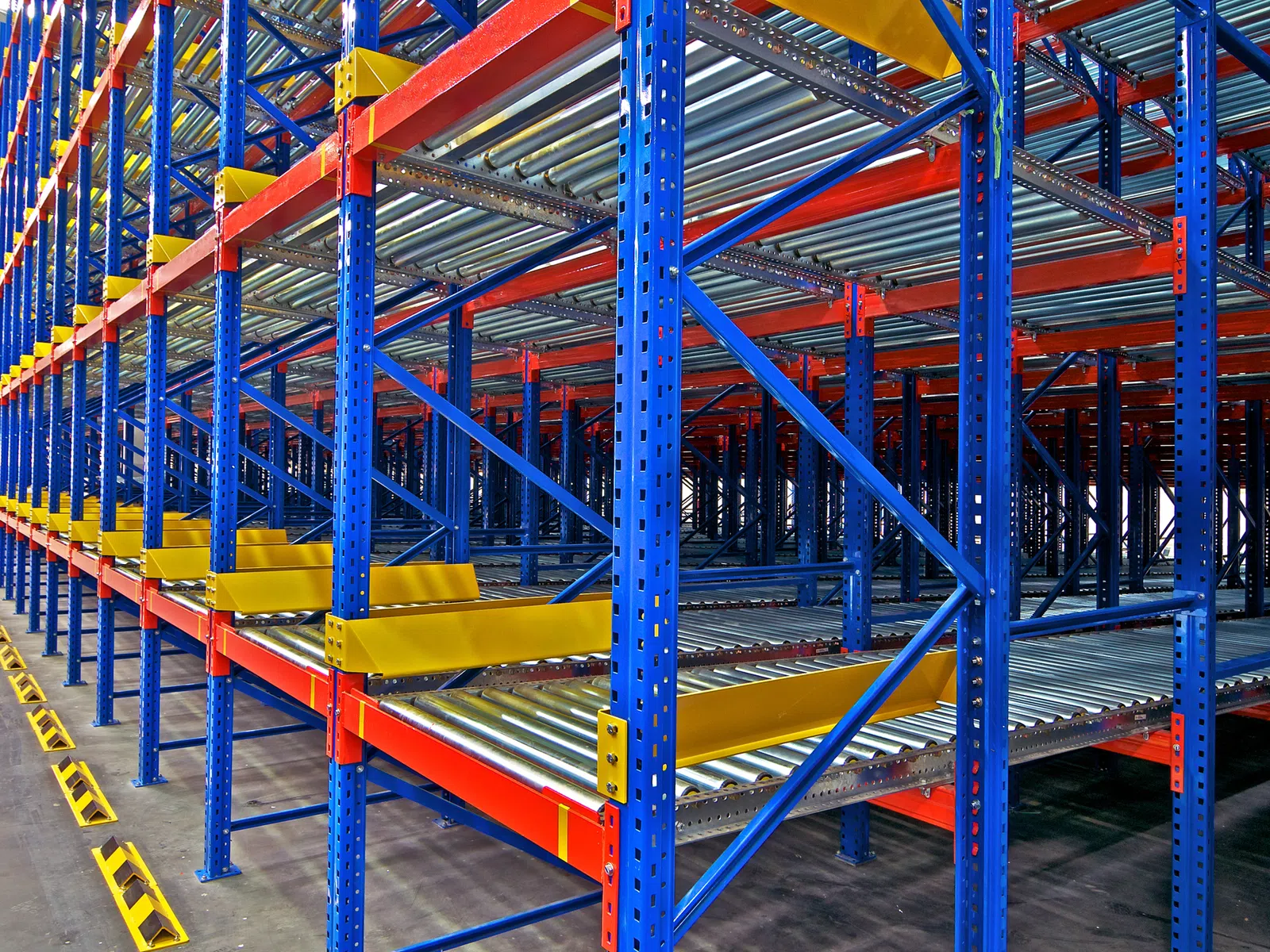
What Pallet Flow Rack Is
In 30 Seconds
Pallet flow rack is deep lane storage on pitched roller conveyor. Pallets load at the back, gravity carries them forward, and arrive at the pick face in the order loaded, FIFO, which is why date-coded inventory lives here.
The engineering is in the braking. Speed controllers hold accelerating pallets to a walking pace; separators keep the front pallet from being crushed. Lane pitch is calculated from pallet weight, so a lane built for full pallets won't reliably move light ones.
Replenishment and picking never compete: loading at the back, picking at the front.
Rack with pitched gravity lanes. Loads are placed at the back and roll to the pick face on their own. It is the only high-density system that rotates correctly. Load at one end, pick at the other, always oldest first. Pallet flow moves unit loads on roller lanes. Carton flow moves cases on wheel tracks for hand picking. Date-coded stock, and any pick face where travel time is the constraint.
Where Flow Rack Earns Its Cost
Fit Signals
Flow rack pays off in operations built around rotation and speed rather than raw storage. The six cases below share one trait: something about the workflow already demands what gravity feed does naturally.
Designed and Installed in Atlanta, GA
Engineered, Not Ordered
Flow rack is the most engineering-sensitive racking we install. Lane pitch, brake selection and separator spacing are calculated from your actual pallet weight and pallet condition, and a lane tuned for a 2,000 lb pallet will not behave with a 600 lb one.
We size the lanes to your loads, not to a catalog default, and we ask about your lightest pallet as well as your heaviest.
Professional engineers on staff. Stamped drawings and calculations are part of the normal workflow. Flow systems are typically tall, heavily loaded, and reach the permit threshold in most jurisdictions.
Commissioned rather than just installed. A flow lane is set up and tested with your product before we hand it over, because the first time a real pallet runs the lane is not the moment to discover the pitch is wrong.
Frequently Asked Questions
FAQs
How deep can a pallet flow lane be?
Commonly two to twenty pallets deep depending on the application, the load weight and the available depth. Deeper lanes improve density and increase the engineering demand on braking, because there is more accumulated weight behind the front pallet.
What keeps the pallets from running away?
Speed controllers on the lane hold the load to a controlled pace, and separators hold the front pallet clear of the ones behind it so it can be removed without fighting the accumulated weight.
Will it work with our pallets?
That is the first question we ask, not the last. Flow lanes are less forgiving of damaged or non-standard pallets than any other rack type, because the pallet is rolling on its stringers. Operations moving to flow frequently tighten their pallet standard at the same time.
Can pallet flow and carton flow be in the same system?
Yes, and it is a common configuration. Pallet flow for reserve and full-case movement, carton flow at the pick face, frequently in the same rack structure with a mezzanine above for additional pick modules.
Is flow rack worth it for non-dated stock?
Sometimes. The rotation argument disappears, but the separated replenishment aisle and the reduced rack damage remain, and in a high-throughput operation those alone can carry the decision.
Tell Us What Rotates and How Fast
Start a project
Pallet or carton, whether stock is date-coded, your lightest and heaviest loads, and your picks per hour. Lane design starts there.