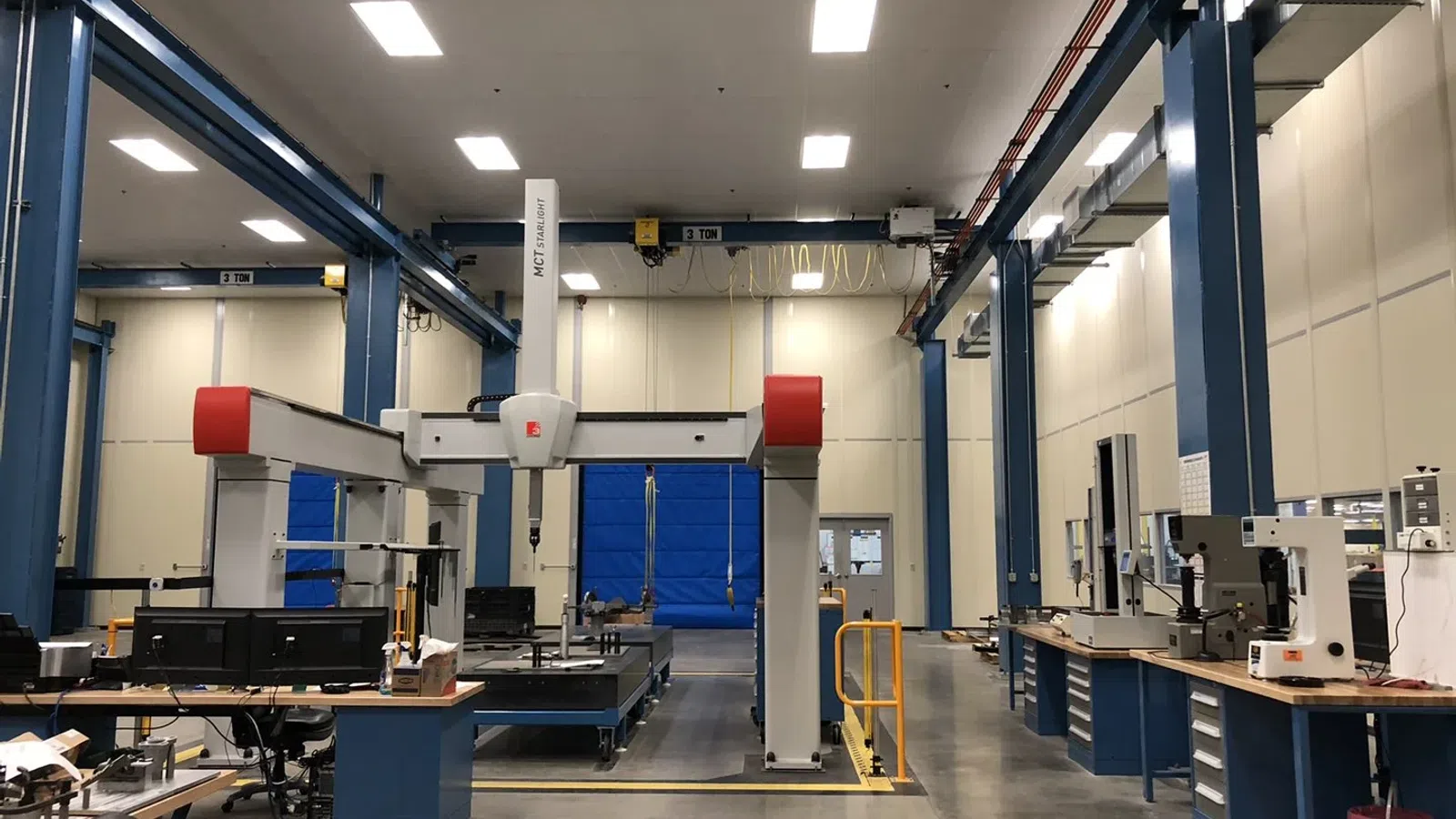
CMM Rooms and Metrology Enclosures in Atlanta, GA
Stable Temperature, Repeatable Measurements.
Plan Your CMM Room
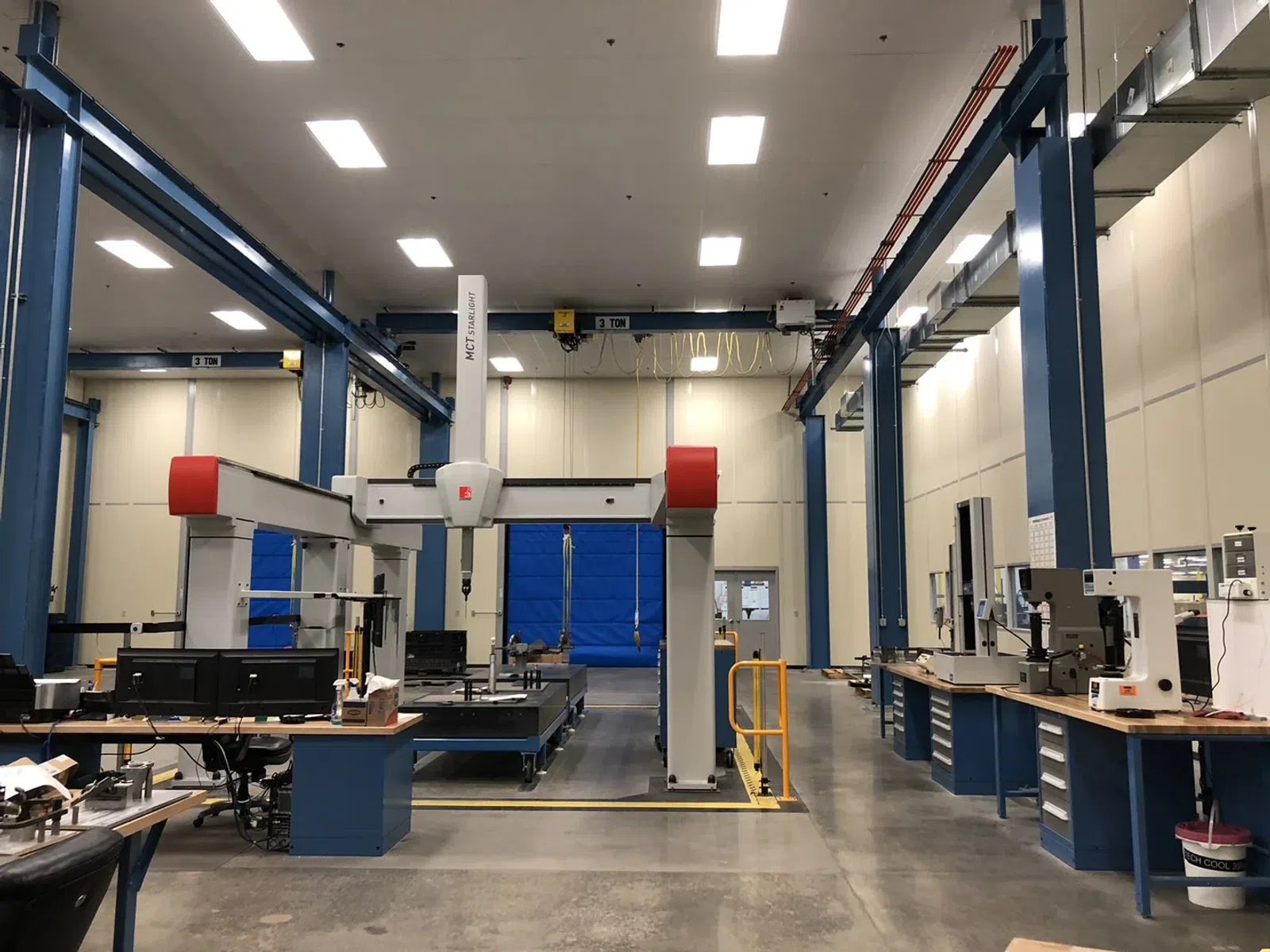
What a CMM Room Is
Metrology Environments
A CMM room is a prefabricated enclosure built around a coordinate measuring machine, specified to a thermal requirement rather than a comfort one. Steel changes dimension with temperature, so a precision part measured on an open plant floor in the morning and afternoon can produce two different readings, both accurate to the part's actual size at that temperature. Metrology standards are written around a reference temperature for this reason. Holding that temperature stable removes the variable, and panel selection, door type, lighting, and entry sequence all follow from the HVAC requirement.
- What it is. A prefabricated enclosure built around a coordinate measuring machine, holding temperature stable enough that the measurement is repeatable.
- Why it exists. Steel moves with temperature. A part measured at 68°F and again at 78°F is not the same part dimensionally, and neither reading is wrong.
- What drives the design. HVAC. Everything else follows from the thermal requirement.
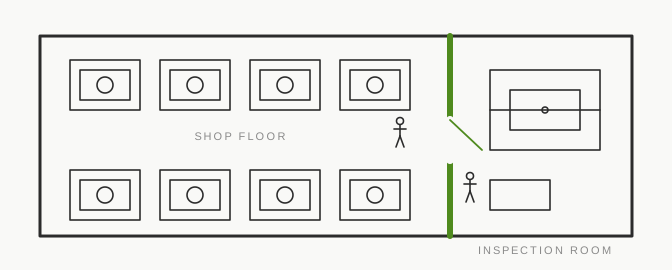
- Where it goes. On your existing slab, inside the plant, near the process it inspects.
Where CMM Rooms Are Used
And Construction
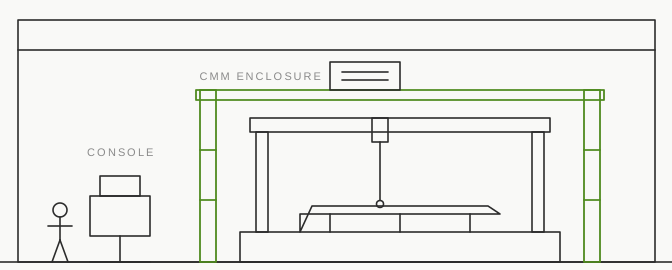
The room is built on the same panel system as a modular office, specified for thermal performance rather than comfort. Wall panels use an insulated core, with thermal panels added where the differential requires it. The roof deck is 22 ga corrugated B deck with a lay-in ceiling, or engineered for load where needed. Doors are prehung steel and gasketed, with a vestibule added where traffic warrants one. HVAC is a dedicated unit sized to actual heat load rather than floor area. Lighting is specified for the inspection task and counted as part of that heat load. Electrical is routed through stud raceways, kept accessible without opening walls.
Automotive and Aerospace
Precision Machining and Job Shops
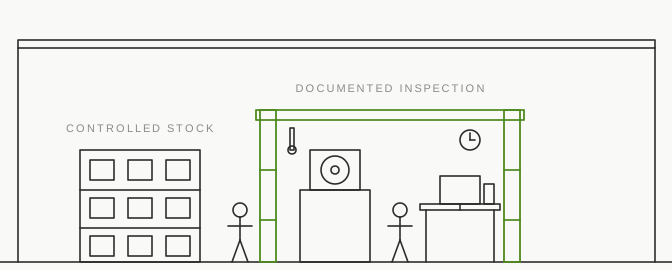
Medical Device
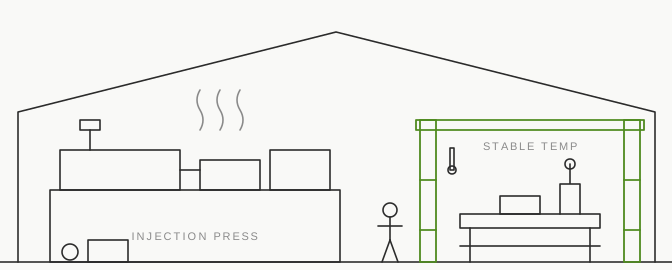
Plastics and Molding
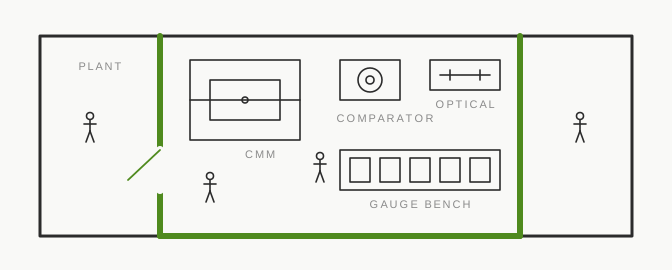
Metrology Labs Generally
Built and Installed by Our Own Crews
Why Power and Motion
Power and Motion designs, supplies, and installs CMM rooms and metrology enclosures across Georgia and the Southeast from a shop in Acworth. HVAC is sized to actual heat load, including machine, controller, lighting, occupancy, and adjacent processes, before a panel system is selected; rooms designed the other way around do not hold their spec. The same shop builds modular offices, clean rooms, partition walls, and mezzanines, so a CMM room next to a new inspection mezzanine is one project rather than two vendors.
Frequently Asked Questions
FAQs
How much does a CMM room cost?
The mechanical package usually costs more than the enclosure. Cost is driven by the temperature tolerance you need to hold, the heat load inside the room, and what is on the other side of the walls. A room holding ±2°F in a conditioned building is a fraction of one holding ±1°F next to a heat-treat line.
What temperature does a CMM room need to hold?
That comes from your metrology requirement and your customers' quality expectations rather than from the enclosure. Tell us the target and the tolerance band, and we design the mechanical to hold it. If you do not have one written down, we will help you establish what your process actually needs.
Can a CMM room be added to an existing plant?
Yes, that is the normal case. It is built on your existing slab inside the building. The main constraints are clear height for the roof deck and HVAC, and available power at the location.
Does a CMM room control vibration?
Not by itself. Vibration travels through the slab, so isolation is a foundation question rather than an enclosure question. If the CMM sits near a press or a forklift aisle, we will flag it during design - but the fix is under the floor, not in the walls.
Can it be moved or expanded later?
Yes. The panel system is demountable, so the room can be expanded, reconfigured, or relocated. The HVAC has to be re-evaluated for the new location, since the heat load usually changes with it.
Tell Us the Machine and the Tolerance
Start a project
The CMM model, the temperature you need to hold, and what is around the proposed location.