Conveyor Installation in Atlanta, GA
Matched to Your Line Speed.
Get Your Line Running
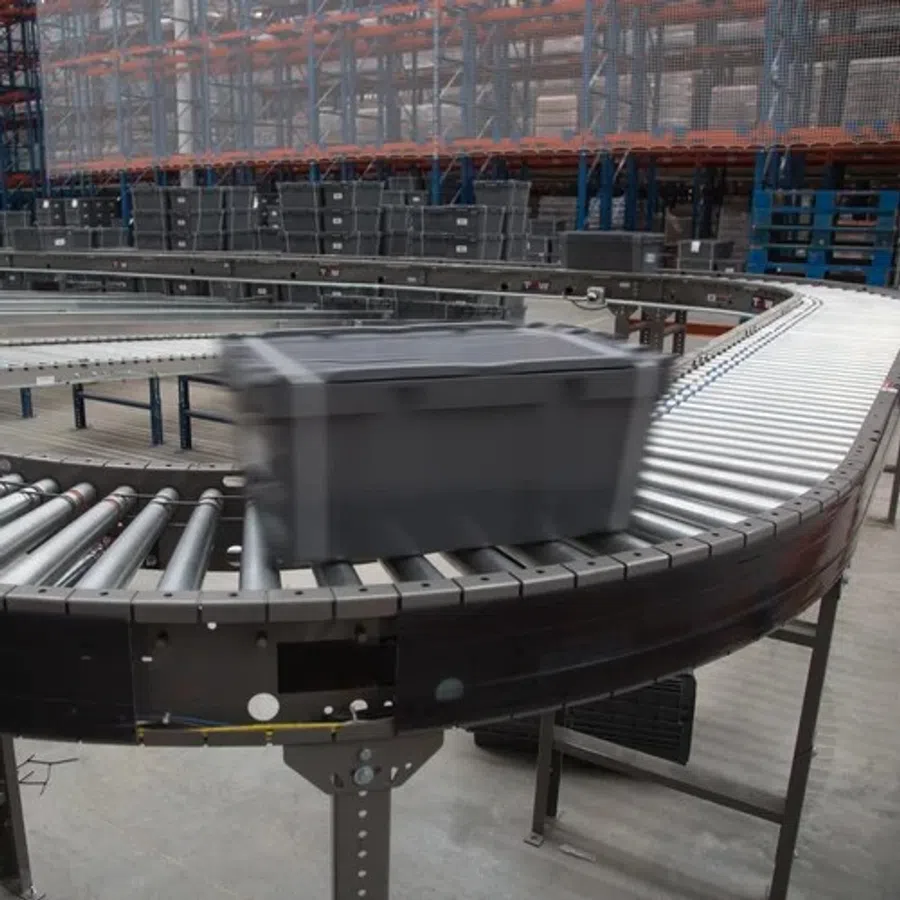
A Conveyor We Built and Installed
Proof
Roll handling line · Manufacturer
An 80 lb felt roll, 100 feet long unrolled, had to be paid out perfectly flat for the next step in production. We designed a custom gravity in-feed cradle and a nip roller that pressed the product flat on its way to the main takeaway line, with a variable frequency drive so the speed could be dialed in to match the production line. The whole system was enclosed in Wirecrafters machine guarding. A Gorbel workstation crane with an air-operated roll lifter handles loading.
What Makes a Conveyor Install Go Right
Decisions
- Decision: What we settle before install
- Rate: Product per minute, and the speed range the drive needs to cover
- Product: Weight, footprint and bottom surface of the smallest and largest item
- Transfers: Where product changes direction, height or conveyor type
- Tie-ins: The upstream and downstream equipment, and who owns each interface
- Guarding: Pinch points, nip points and overhead crossings
- Controls: Start, stop, e-stops and any zoning, with your electrician or ours
How an Install Runs
Process
- 1. Walk the line. Rates, product, space and the equipment on either side.
- 2. Layout. An AutoCAD drawing of the run against your floor.
- 3. Supply or receive. Conveyor ordered, or yours received and checked.
- 4. Install. Supports set, sections leveled and aligned, guarding fitted.
- 5. Startup. Speed set with product running, adjustments made, operators shown the controls.
Frequently Asked Questions
FAQs
Can you extend or reconfigure our existing conveyor?
Yes. Extensions and re-routes are common, as long as the existing components can be identified and matched.
Do you do the electrical?
Yes, as part of a turnkey installation. Drives and controls are wired by our electrician, and the tie-in is coordinated with your maintenance team.
Can you work around production?
Yes. Most conveyor work happens on nights, weekends or shutdown windows, with the tie-in saved for last.
Send Us the Product and the Rate
Start a project
What moves, how fast, and a photo or drawing of the space.